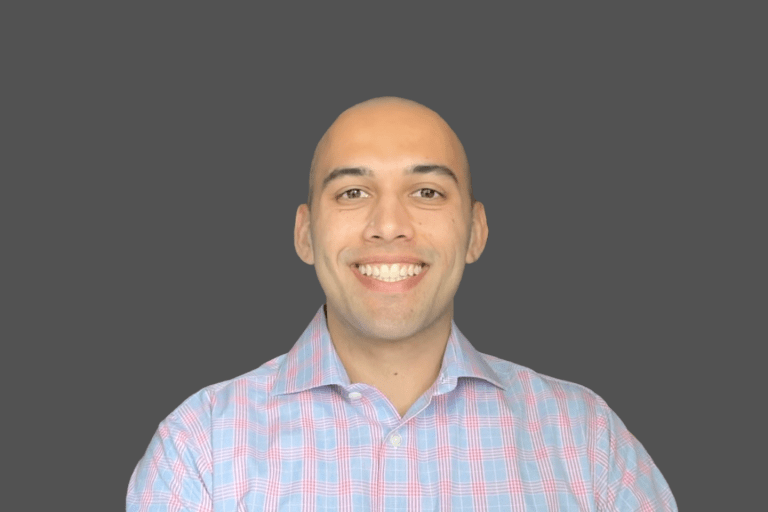
Hello, I'm Liam.
 Applied Mathematics PhD candidate
The Ohio State University
I am excited about using the power of mathematics to uncover mysteries in biology. I study how biological networks, from biochemical pathways to cell signaling to neural circuits, make living systems robust to mutations and environmental changes.
Professional life
I am a fifth-year PhD candidate in the Applied Mathematics track at The Ohio State University, where I work in Professor Adriana Dawes' lab group. Our group studies how biochemical pathways, mechanical structures, and cell geometry interact and regulate one another to produce the complex patterns we associate with biological systems.
Foremost, I would like to be able to help people in my career, and I think I can make a difference researching mathematical biology. It is becoming increasingly important in understanding human health and medicine.
In my research, I am interested in the apparent paradox of biological systems being both flexible and robust. Humans, for example, develop reliably despite enormous variation in their genetic and environmental contexts. Qualitative features of humans are often preserved (we have two hands, five fingers, a nose, etc.) yet the exact structure of our body plan varies significantly (we have different heights, weights, and other physical characteristics). In my work, we use dynamical systems theory to provide evidence that network structures (e.g. biochemical signaling networks, neural networks, and cell signaling networks) enforce certain qualitative behaviors, while allowing exact numbers to drift and therefore may be responsible for the flexibility and robustness we see in biology.
Recent papers.
L. D. O'Brien, P. Gandhi, M.-V. Ciocanel, and A. T. Dawes, A high throughput and user-friendly computational tool for quantifying and visualizing symmetry variation in image datasets, Bulletin of Mathematical Biology 88, 11 (2026). doi:10.1007/s11538-026-01754-9
L. D. O'Brien and A. T. Dawes, Structural causes of pattern formation and loss through model-independent bifurcation analysis, Journal of Mathematical Biology 91, 6 (2025). doi:10.1007/s00285-025-02296-9
On AI and the future of mathematics
Recently, AI has helped solve open problems in mathematics that humans could not solve for decades. That makes the future of the mathematical profession highly uncertain. But I also think it is an exciting time to be a mathematician! As proofs become quicker and more accessible, they may be a tool that industry can afford to use rather than remaining an academic luxury. I hope that formal reasoning can augment the modeling and simulation that already drive engineering, pharmaceutical development, and biotechnology, by letting us prove that a model's qualitative behavior is forced rather than merely observing it in a handful of simulations. That is the kind of question my research already asks, and I want to help build the bridge between the two.
Education
- PhD, Applied Mathematics — The Ohio State University, Columbus, OH (in progress)
- BA — Middlebury College, Middlebury, VT
Curious about mathematical biology?
Two short articles from the AMS Notices are a good place to start: